Using a flipped-classroom approach for teaching physics
In this essay I will provide a brief account of my experience of using a flipped-classroom approach for teaching physics, including what I perceive as the benefits, drawbacks, challenges and misconceptions about this approach. This is informed by my experience of employing this approach at the University of Bristol over the past six years, for two large units (2nd year and 3rd year).
What is a flipped-classroom approach?
In a flipped-classroom approach the material that would traditionally be delivered in a lecture is delivered outside timetabled contact hours, freeing them up for interactive, active-learning sessions. The approach I take is to provide students with pre-recorded videos (accompanied with a comprehensive set of lecture notes) which cover the lecture material. Students are expected to watch these videos in their own time. I provide roughly the equivalent of three lectures’ worth per week, approximately 2.5 hours, which is typically divided into 5–6 videos, of no more than 30 minutes each. At the end of each video, I typically include one or two short questions for students to attempt immediately, to check their understanding.
Students then attend weekly extended (two-hour) problem classes where I set unseen problems, which aim to contextualise the material. Students are encouraged to work in small groups (if they please), and together with teaching assistant(s) I interact with them in small groups, before presenting solutions to the entire class and moving on to the next question. Sessions may run with the whole cohort, or be repeated for half-cohorts, depending on size, to ensure that all students have a chance to ask questions and interact with me and the TAs.
I also release a more challenging set of problems for students to attempt each week, and finally, hold an additional ‘wrap-up’ session, which may either summarise that week’s material, or cover additional questions (e.g. past exam papers). The total number of contact hours is therefore kept the same as in a traditional approach, however the usage has changed significantly.
The ideal sequencing is therefore: watch the videos before the problem class; attend the class and put into practice the material; consolidate the learning by attempting more challenging questions thereafter, and finally attend the wrap-up session.
What are the benefits of a flipped-classroom approach?
The reason I employ a flipped-classroom approach is that I perceive there to be numerous important benefits, which for me outweigh any disadvantages. The primary benefits are:
-
The contact hours I have with students are precious, and I prefer to use this for active learning, leaving more passive learning to be carried out by students in their own time.
-
Learners have the freedom to carry out the more passive learning element at a time and pace that suits them; they can stop and pause and rewind the videos; they can speed up the playback; they can watch them first thing in the morning or in the middle of the night. I encourage them to plan their time, and find a rhythm that works for them.
-
Not all content naturally fits into the 50 minutes of a timetabled lecture. With videos, the content is divided up into topics (potentially with multiple videos per topic). This gives a more logical structure and cadence to the content and its delivery.
-
Students have more opportunities to interact with me as a lecturer, and I get a better feeling for specific topics that a given cohort are struggling with. I can more naturally adapt the problem classes to tailor them towards students, without the time pressure of having to ‘get through’ all my lecture material. I also find that it can be very small things which students get stuck on, and a tiny bit of interaction can be enough to ‘unstick’ them. It also helps to partially break down the intimidation some students feel about asking questions to lecturers.
What are the drawbacks of this approach?
It must be acknowledged that there are some drawbacks to this approach, and I find it important to be realistic about this. The primary ones I perceive are:
-
Some students do not enjoy learning lecture material from videos, or find it challenging. Part of this is lack of familiarity I believe, but nevertheless, if students really don’t engage with the videos, it can be hard for them to benefit from the advantages of this approach. As such, a flipped classroom favours engaged and active students.
-
Students need to take on more of the responsibility of structuring their learning well. A tired student will often still attend a timetabled lecture, but a video that can always be watched later is much easier to postpone. I ultimately think it is a benefit for students to learn to be organised and disciplined in their learning, but this is an additional (meta) learning curve.
-
If a student gets behind on the lecture content, they tend to stop attending the problem classes, which are an essential part of the learning. I have found that drop-off in attendance (which also occurs for traditional methods) can be higher for flipped. I am always careful to encourage students to keep on attending, even if a bit behind (I often hear from students that they have watched some, but not all, of the videos before the problem class). Reassuring them that the classes are still beneficial does appear to help.
-
Finally, related to the above points, my experience is that the final mark distribution for units employing flipped can show signs of a bimodal mark distribution, reflecting two cohorts of students: those who engage, and those who disengage. While this is true of all teaching methods, my anecdotal experience is that flipped does tend to amplify this (however, I have to admit that I haven’t undertaken a proper analysis of this, although I plan to in the coming year, time permitting).
What are the misconceptions about this approach?
I have also come to realise that there are some misconceptions about a flipped-classroom approach, which I prefer to differentiate from drawbacks.
-
Some students view a flipped classroom as “online learning”, focusing only on the fact that the lecture content is provided in videos, which they watch online. I view this as a big misconception, and a narrow focus on one aspect of the learning process, neglecting to acknowledge that there is a trade-off, and the gain is in the additional time for active learning in problem classes, as well as the other advantages above.
-
Related to this, some students believe that it is easier to catch up on a unit taught using a flipped classroom. Since the lecture content is in the videos, some students prioritise their time towards units with traditional lectures, with the view that they can learn the content for a flipped unit later. This misses the fact that the problem classes are central to this approach, and by missing or under-utilising these, students fail to truly benefit from this approach.
-
Some students have told me that a benefit of in-person lectures is the ability to ask questions in real time, as they arise. While this is certainly true, my experience is that, especially for large cohorts, very few students really have the chance to ask questions during lectures. In fact, it isn’t possible to have too many interruptions without a lecture getting unduly delayed. I believe, on the contrary, that it can be beneficial for a learner to have time to think about their question before asking, and can then ask in a problem class (or by email/discussion board), where it can be answered more thoroughly. They can also discuss it with other students. All of these provide excellent learning opportunities. The misconception, to my mind, is not that real-time questions are valuable, which they are, but that the opportunity to ask them is lost; in my experience it is relocated, and expanded.
What are the challenges of employing a flipped-classroom approach?
Finally, I would like to discuss some of the challenges of employing a flipped-classroom approach.
-
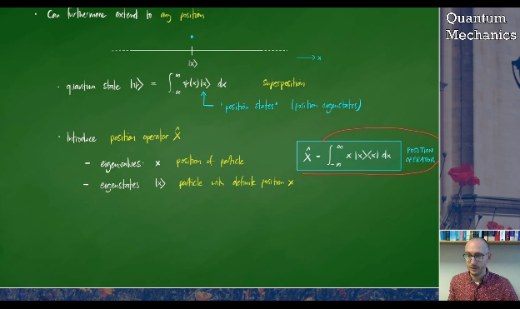
It is important that the videos are of a good quality. My advice is to include yourself in the videos (daunting as that may be). My rationale is that it helps the students feel a connection to the lecturer, and allows for nuance to be conveyed through expression and body language. Producing such videos can be a time-consuming process in general, with an associated learning curve. My university provides access to tools such as Camtasia which help produce the videos, and free tools such as OBS Studio are very helpful for recording (with the ability to set up scenes, as in Figure 1). I found it important to plan appropriately before recording, including how I was going to record, and minimising any post-production to keep the workload manageable. Once recorded, I upload the videos to Mediasite (the university’s video platform) and link them directly from Blackboard, our virtual learning environment (a text link being easiest). Mediasite will also automatically caption videos (although these are worth checking, since automatic captioning can cope poorly with technical vocabulary, and does not cover equations, for which the lecture notes are the accessible route).
-
I should note that some sources advise much shorter videos than the ones I produce (of 6–10 minutes). I personally found it too short for my purposes, and have not had any complaints about the length of my videos (which are still around half the length of a traditional lecture on average). On the contrary, feedback I have had from students is that the number of videos per week (regardless of length) affects their perception of how much work needs to be done, and so having 5 longer videos can feel more manageable than 15 much shorter videos.
-
In general it can be hard to update videos, and hence in my experience they tend to get ‘frozen’, whereas in a traditional lecture, the material is naturally updated each year. My view is that my videos need refreshing approximately every 5 years, after which I have accumulated many small (and large) changes that I want to make. I have found the process of updating videos enjoyable (if hard work) and have always seen an improvement in the quality.
Summary
In summary, I find employing a flipped-classroom approach a highly enjoyable and effective method of teaching. I find that some students genuinely love it, and I’ve had feedback along the lines of “I wish every lecturer employed this approach”, although I have to acknowledge it isn’t uniformly popular. Nevertheless, I think it is great for students to experience a range of different approaches, and hence it is certainly worth trying if you’re interested.
Further reading
I’m happy to discuss, so please reach out if you have any questions that weren’t answered above. You may also wish to consult the following: